
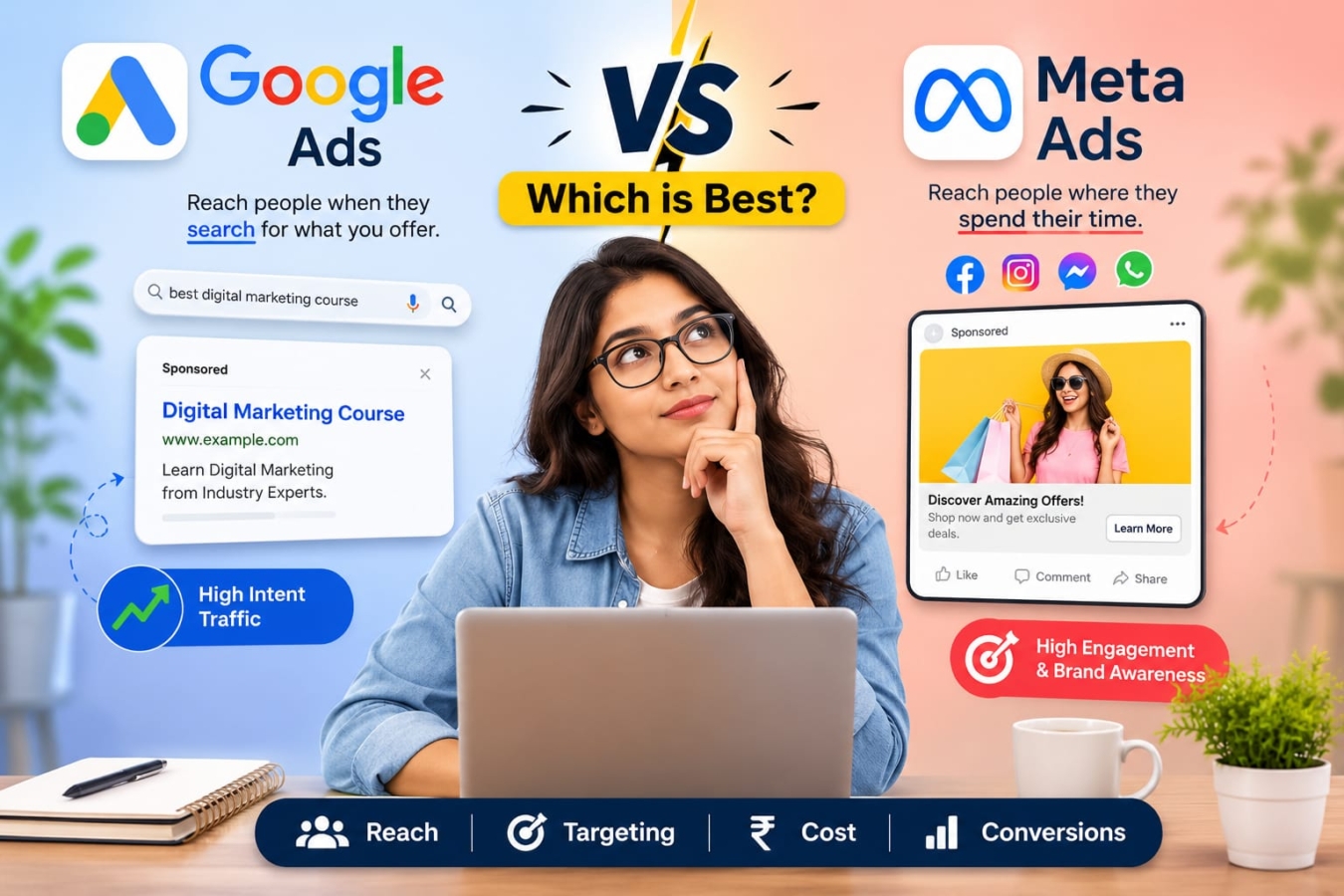
There isn’t a single “better” platform. Google Ads is the better choice for capturing existing demand from users with high purchase intent, while Meta Ads is more effective at creating demand, building brand awareness, and scaling audience acquisition. The highest-performing strategy for most businesses is using both platforms together within a full-funnel marketing strategy.
What is Google Ads?
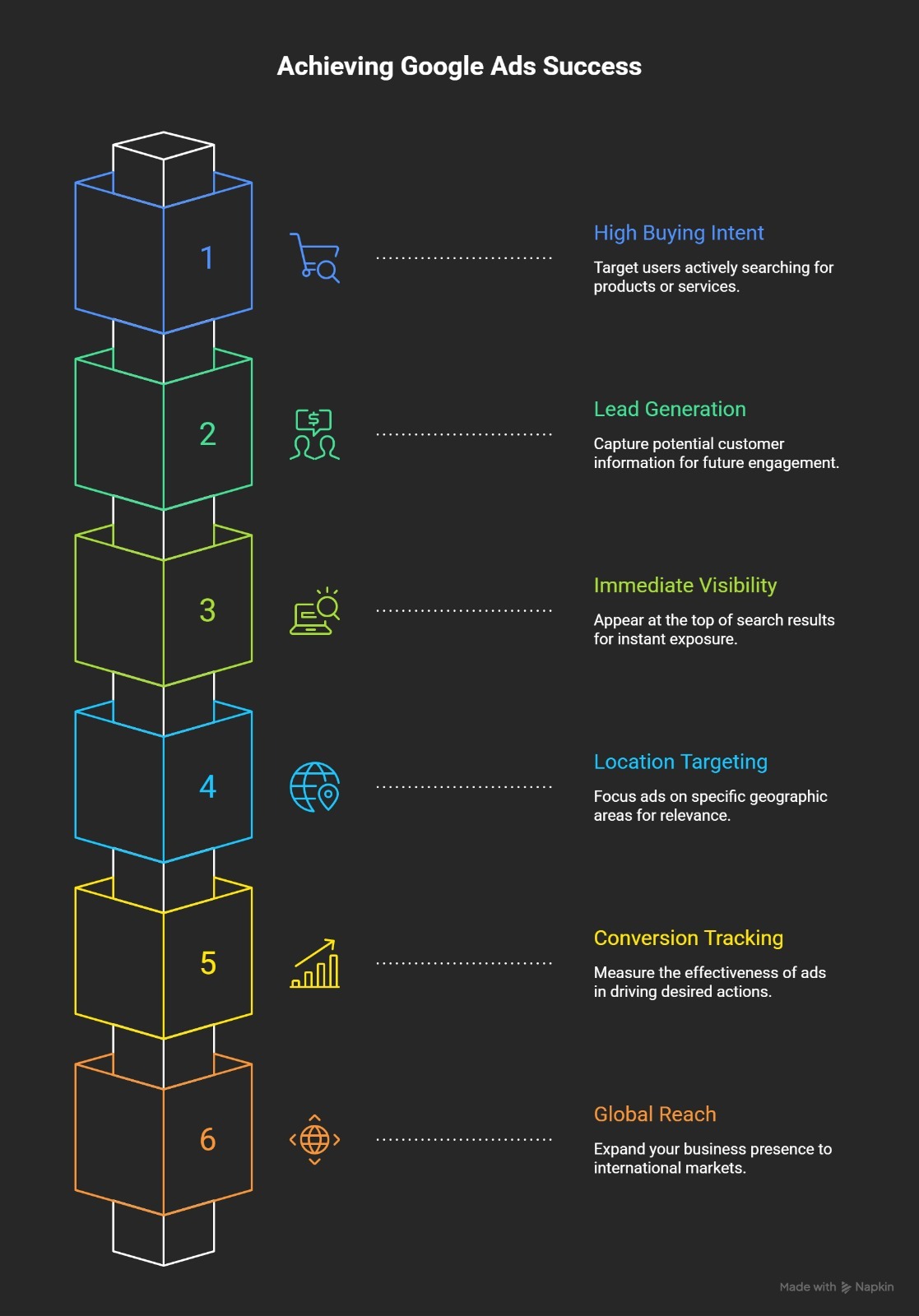
Google Ads is Google’s auction-based advertising platform that enables businesses to reach users across Search, Shopping, YouTube, Display, Discover, Gmail, and Maps. It uses real-time bidding, audience signals, and machine learning to deliver ads based on search intent, user behavior, and campaign objectives.
Google Ads supports multiple campaign types, including Search, Performance Max, Shopping, Display, Demand Gen, Video, and App campaigns, allowing businesses to optimize for goals such as lead generation, eCommerce sales, local store visits, app installs, and brand awareness.
How Google Ads Works in 2026 ?
When someone searches for terms like “best digital marketing agency in kozhikode” or “SEO services near me,” Google displays paid advertisements at the top of search results. Advertisers pay only when users click on their ads (Pay-Per-Click or PPC).
What is Meta Ads?
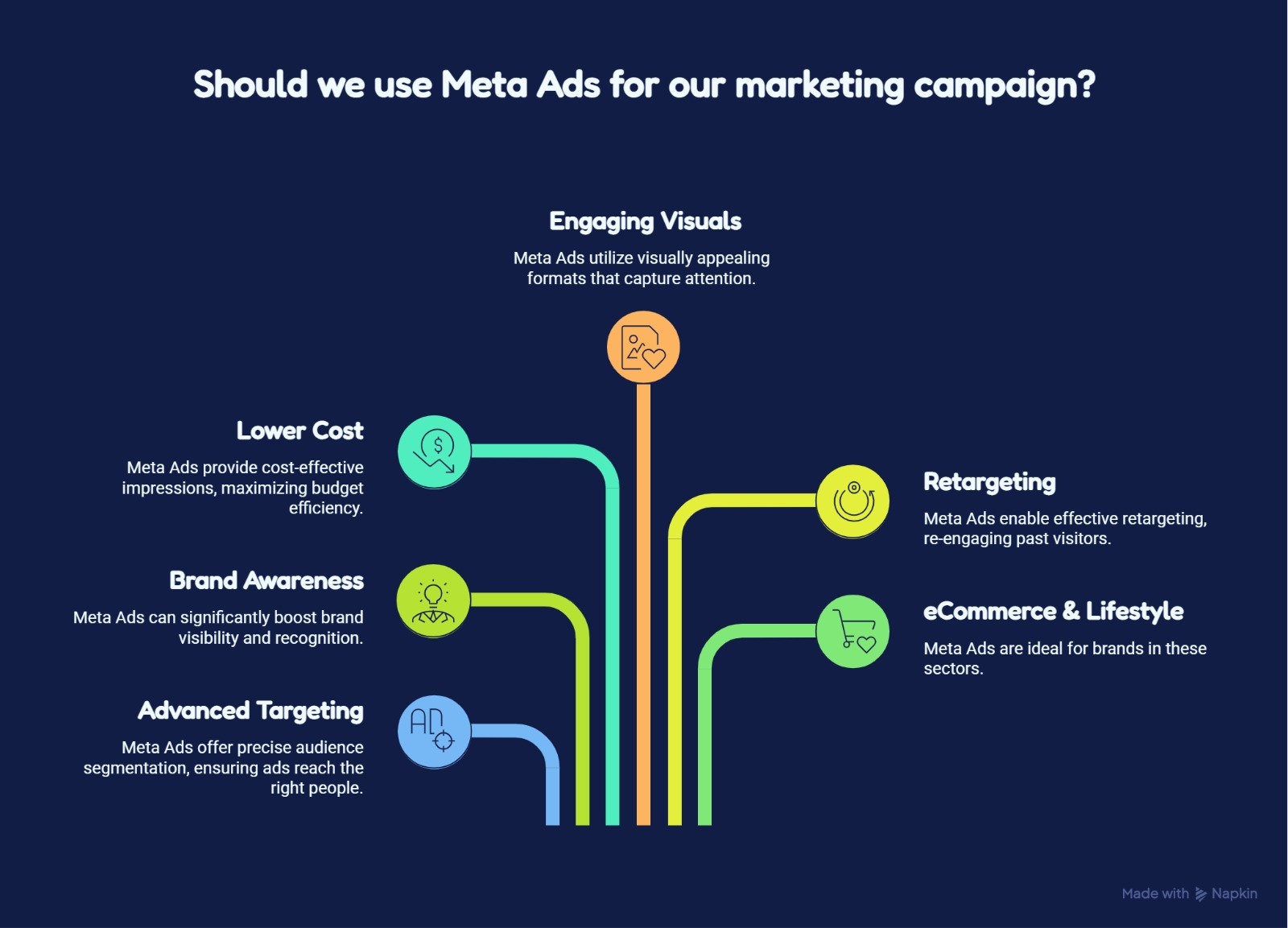
Meta Ads is Meta’s AI-powered advertising platform that enables businesses to reach audiences across Facebook, Instagram, Messenger, and the Meta Audience Network. Instead of targeting search intent, it leverages demographics, interests, behaviors, first-party data, and machine learning to create demand, drive engagement, and scale conversions through highly personalized visual ad experiences.
1. How does Google Ads target potential customers?
Google Ads targets users based on search intent, keywords, audience signals, location, and device data. Its real-time auction and Smart Bidding optimize ad delivery to maximize conversions and ROAS.
2. How does Meta Ads target the right audience?
Meta Ads uses AI-powered audience modeling to analyze first-party data, user behavior, engagement signals, and conversion events, delivering ads to users most likely to complete your campaign objective.
3. Does Google Ads use AI for campaign optimization?
Yes. Google Ads uses Smart Bidding, audience signals, and machine learning to optimize bids, placements, and ad delivery based on real-time auction data and conversion likelihood.
4. Does Meta Ads use keywords like Google Ads?
No. Meta Ads is audience-driven, not keyword-driven. It targets users based on interests, behaviors, demographics, Custom Audiences, and Lookalike Audiences.
5. What is the role of Quality Score in Google Ads?
Quality Score measures keyword relevance, expected CTR, ad relevance, and landing page experience. A higher Quality Score can reduce CPC and improve Ad Rank.
6. What is the role of the Meta Pixel in advertising?
The Meta Pixel tracks user actions such as page views, purchases, and lead submissions. It powers conversion tracking, remarketing, and AI-driven campaign optimization.
7. Which platform is better for high-intent conversions?
Google Ads is better for capturing high-intent users actively searching for products or services, making it ideal for lead generation and direct-response campaigns.
8. Which platform is better for demand generation?
Meta Ads excels at demand generation by using visual creatives and AI-driven targeting to introduce products and services to audiences before they actively search.
9. When should businesses use Google Ads and Meta Ads together?
A full-funnel strategy combines Meta Ads for awareness and consideration with Google Ads for demand capture, improving conversion rates, ROAS, and customer acquisition efficiency.
10. Which platform delivers a better ROAS in 2026?
There is no universal winner. Google Ads typically delivers higher ROAS for high-intent search campaigns, while Meta Ads often achieves stronger ROAS for audience acquisition, remarketing, and scalable eCommerce campaigns. The best results usually come from integrating both platforms.
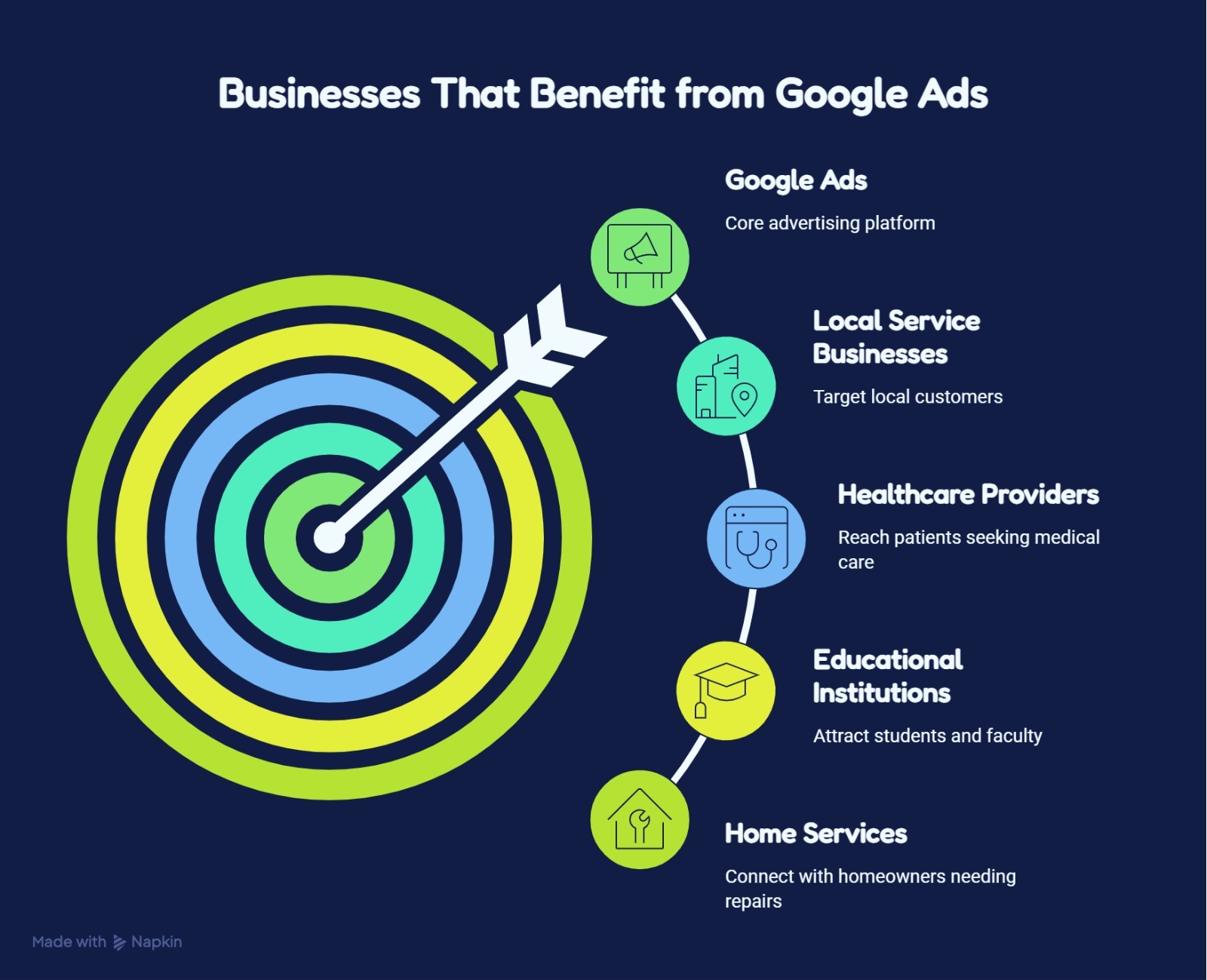
Which Businesses Should Choose Google Ads?
Google Ads is ideal for:
- Local service businesses
- Healthcare providers
- Educational institutions
- Home services
- Law firms
- Real estate agencies
- SEO agencies
- Emergency services
These businesses benefit because customers actively search for their services before making a purchase.
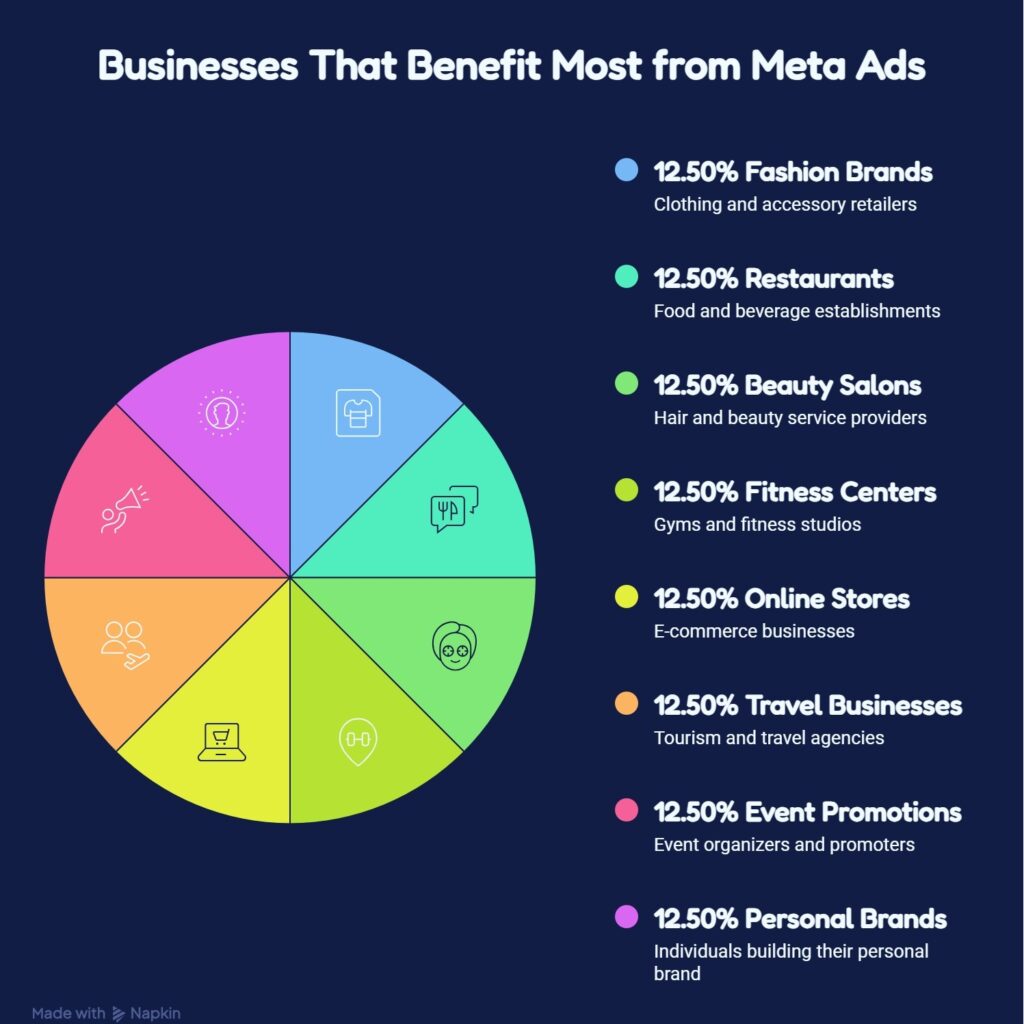
Which Businesses Should Choose Meta Ads?
Meta Ads works particularly well for:
- Fashion brands
- Restaurants
- Beauty salons
- Fitness centers
- Online stores
- Travel businesses
- Event promotions
- Personal brands
Visual content performs exceptionally well on Facebook and Instagram, helping businesses build trust and attract new customers.
Final Verdict
There is no universal winner in the Google Ads vs Meta Ads debate.
Choose Google Ads if you want immediate leads from customers actively searching for your services.
Choose Meta Ads if your goal is building brand awareness, reaching new audiences, and engaging customers through compelling visual content.
For most businesses in 2026, using both platforms together creates a balanced digital marketing strategy that drives sustainable growth.
Conclusion
Choosing between Google Ads and Meta Ads depends on your business objectives, target audience, and marketing budget. Google Ads excels at capturing demand, while Meta Ads is highly effective at creating demand through engaging social media campaigns.
Instead of viewing these platforms as competitors, businesses should leverage both to build a comprehensive digital marketing strategy. Combining search and social media advertising helps increase brand visibility, generate qualified leads, and maximize return on investment.
If you’re unsure which platform is the right fit for your business, Map Leads can help. As a trusted digital marketing agency, Map Leads develops customized Google Ads and Meta Ads strategies tailored to your business goals. Whether you’re looking to generate more leads,
Add a Comment